How to Protect Your Phone Number from Online SMS Bombers
Online SMS bombers have become increasingly common in recent years. These tools can flood a phone number with hundreds or even thousands of unwanted text messages within minutes. While some people use SMS bombers as a prank, they can cause serious inconvenience, disrupt communication, and even pose privacy risks.
If you have ever received a sudden flood of verification codes, promotional messages, or spam texts, your number may have been targeted by an SMS bomber. Fortunately, there are several effective ways to protect your phone number and reduce the risk of SMS bombing attacks. Understanding how to protect your phone number is essential for preventing spam, avoiding privacy risks, and keeping your personal information secure in today’s digital world.
In this guide, you’ll learn how SMS bombers work and the best methods to keep your phone number safe.
What Is an SMS Bomber?
An SMS bomber is a tool that repeatedly sends large numbers of text messages to a single phone number. Most SMS bombers exploit online registration forms, OTP services, and marketing platforms to generate continuous SMS traffic.
Common signs of an SMS bombing attack include:
- Receiving hundreds of messages in a short period
- Multiple OTP and verification codes arriving unexpectedly
- Promotional texts from unknown services
- Delayed delivery of important messages
- Increased battery usage due to constant notifications
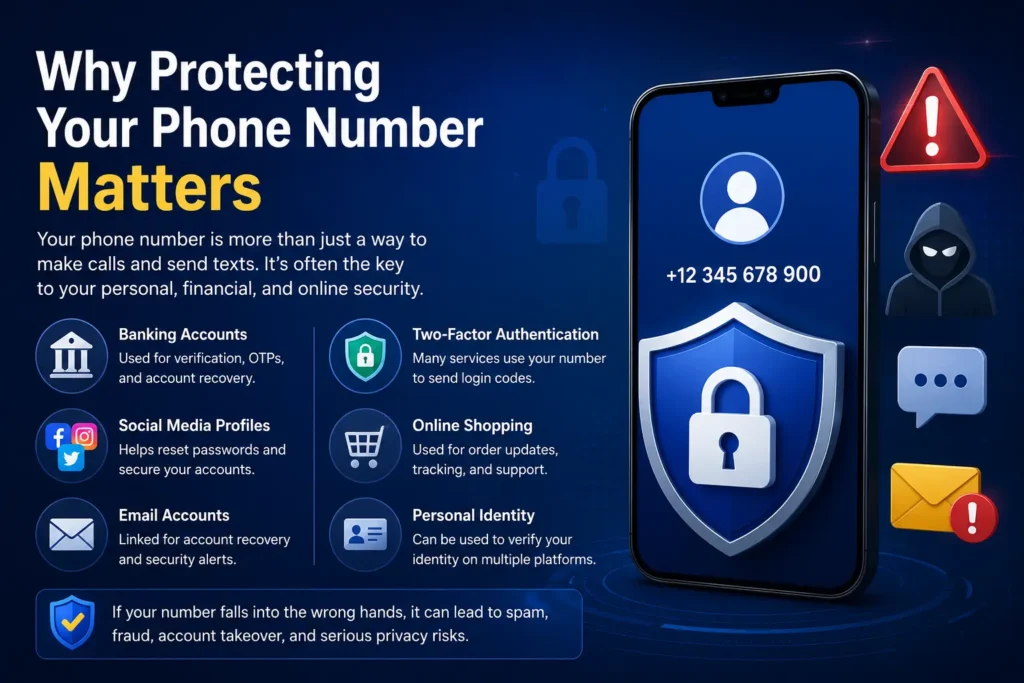
Why Protecting Your Phone Number Matters
Your phone number is often linked to:
- Banking accounts
- Social media profiles
- Email accounts
- Two-factor authentication (2FA)
- Online shopping platforms
If your number becomes publicly available, it can be targeted by spammers, scammers, and SMS bombers. Taking preventive measures can help protect both your privacy and digital security.
1. Avoid Sharing Your Phone Number Publicly
One of the easiest ways for attackers to find phone numbers is through public websites and social media profiles.
Best Practices
- Remove your phone number from public social media accounts.
- Avoid posting your number in comments, forums, or online marketplaces.
- Use direct messaging instead of sharing numbers publicly.
- Review privacy settings regularly.
The fewer places your number appears online, the lower the risk of becoming a target.
2. Be Careful with Online Forms
Many websites request a phone number during registration.
Before entering your number:
- Verify the website’s legitimacy.
- Read the privacy policy.
- Avoid suspicious websites.
- Skip optional phone number fields whenever possible.
Providing your number only to trusted websites reduces unnecessary exposure.
3. Use a Secondary Number for Signups
Consider using a separate phone number for:
- Online registrations
- Promotional offers
- Free trials
- Newsletter subscriptions
This helps keep your primary number private and protected from potential SMS bombing attempts.
4. Enable Spam Protection Features
Modern smartphones include built-in spam filtering tools.
Android
- Open Messages.
- Go to Settings.
- Enable Spam Protection.
iPhone
- Open Settings.
- Navigate to Messages.
- Enable “Filter Unknown Senders.”
These features help reduce unwanted messages and improve overall security.
5. Limit Exposure on Social Media
Cybercriminals often collect phone numbers from social networking platforms.
To protect yourself:
- Set your profile to private.
- Hide contact information.
- Restrict who can search for you using your phone number.
- Review privacy settings frequently.
Social media privacy plays a significant role in preventing SMS spam and bombing attacks.
6. Use Two-Factor Authentication Alternatives
Although SMS-based 2FA is widely used, authentication apps provide stronger protection.
Popular options include:
- Google Authenticator
- Microsoft Authenticator
- Authy
Authentication apps reduce dependence on SMS and prevent important security codes from getting lost during an SMS bombing attack.
7. Block and Report Suspicious Numbers
If you notice repeated spam messages:
- Block suspicious senders.
- Report spam through your messaging app.
- Notify your mobile carrier if the attack continues.
Reporting spam helps carriers improve their filtering systems and protect other users.
8. Contact Your Mobile Carrier
Many mobile network providers offer spam protection services and can assist during large-scale SMS attacks.
Your carrier may:
- Filter suspicious traffic
- Temporarily block spam sources
- Investigate abuse reports
- Recommend additional security measures
If the attack becomes severe, contacting your carrier should be one of your first steps.
9. Monitor Data Breaches
Phone numbers often become exposed through data breaches.
To stay protected:
- Change passwords regularly.
- Enable account security alerts.
- Monitor accounts for unusual activity.
- Use unique passwords for important services.
If your information appears in a data breach, update your security settings immediately.
10. Keep Your Personal Information Private
Attackers often combine information from multiple sources.
Avoid publicly sharing:
- Phone numbers
- Email addresses
- Home addresses
- Personal identification details
Strong privacy habits significantly reduce the likelihood of becoming an SMS bombing target.
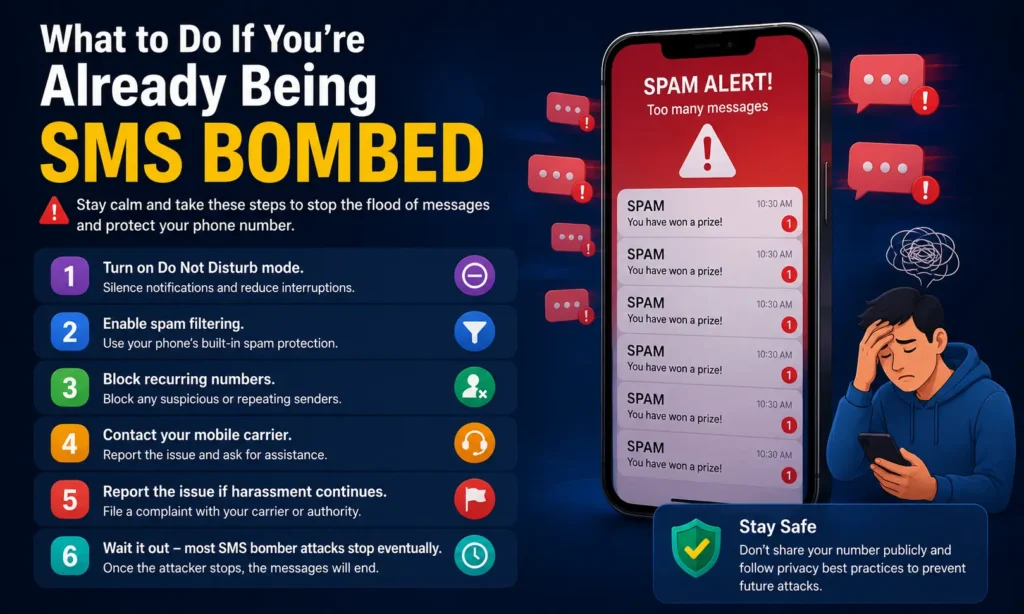
What to Do If You’re Already Being SMS Bombed
If you’re currently receiving hundreds of unwanted messages:
- Enable Do Not Disturb mode.
- Activate spam filtering features.
- Block recurring senders.
- Contact your mobile carrier.
- Report the attack if necessary.
- Wait for the automated messages to stop.
Most SMS bombing campaigns eventually end once the attacker stops triggering requests.
Frequently Asked Questions
Can SMS Bombers Hack My Phone?
No. SMS bombers typically send large numbers of messages but do not directly hack your device. However, they can create inconvenience and disrupt communication.
Are SMS Bombers Illegal?
The legality depends on local laws and how the tool is used. Harassment, abuse, or service disruption may violate laws in many countries.
Can I Completely Prevent SMS Bombing?
While no method offers 100% protection, limiting public exposure of your phone number and using spam protection tools can greatly reduce the risk.
Will Changing My Number Stop SMS Bombing?
In severe cases, changing your phone number can help, but it should be considered a last resort.
Conclusion
Protecting your phone number from online SMS bombers starts with maintaining good privacy habits. Avoid sharing your number publicly, use spam protection features, limit exposure on social media, and consider using a secondary number for online registrations. By taking these precautions, you can significantly reduce the chances of becoming a target and keep your communications secure.
Staying proactive is the best defense against SMS bombers, spam campaigns, and other forms of unwanted mobile harassment.